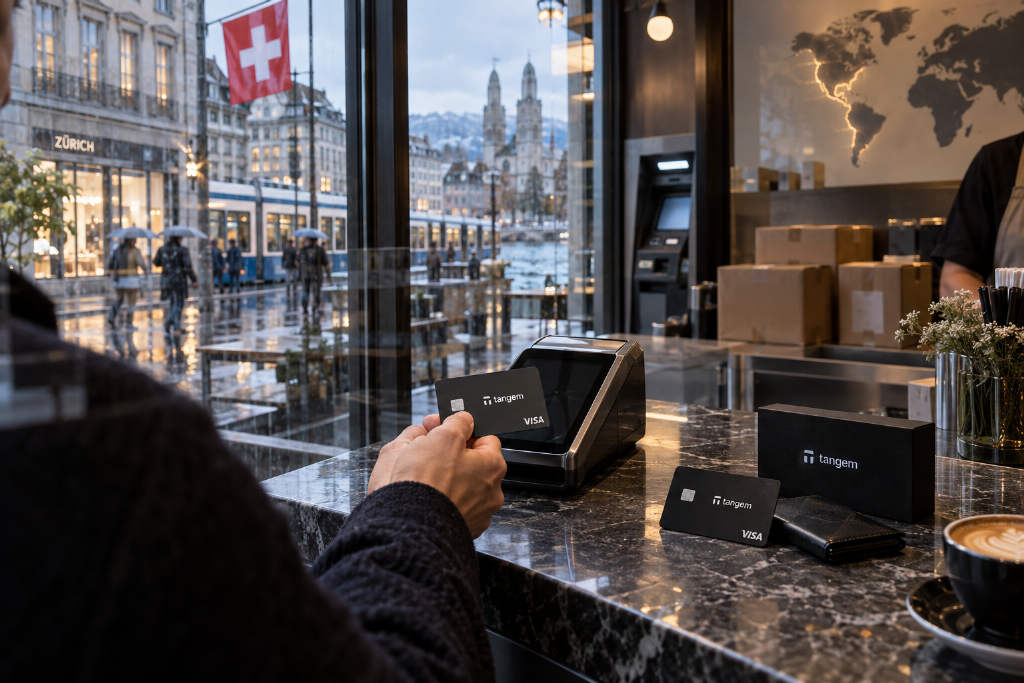
Tangem2026-10-07 11:37:48Tangem launches first physical Visa crypto card as access lags demand in some marketsSwiss crypto wallet provider Tangem has rolled out its first physical Visa card, opening in-store purchases, online payments and ATM withdrawals to users of its self-custodial payment product. The initial release is capped at 5,000 cards. According to Tangem, demand for crypto-linked cards is not lining up neatly with where cards can actually be issued and delivered. The company told Cointelegraph that more than 40% of Tangem Pay payments come from Latin America and more than 30% from the United States, even as physical card access remains limited in several jurisdictions. Tangem said it currently cannot ship the card to roughly 20 countries, including China, Russia, North Korea and Palestine, citing factors such as KYC rules, sanctions, local banking requirements and card-issuing compliance. The company is also adding cashback in Circle’s USDC stablecoin, offering 1% for Basic users and 2% for Plus users on eligible purchases, and plans to present the first physical Tangem Pay cards at Token2049 in Singapore.30
crypto cards2026-10-06 21:51:05Crypto card payment volume climbs to a record $12.5 billionCrypto card payment volume has reached a record $12.5 billion, according to data from paymentscan.xyz that was first shared by The Kobeissi Letter. The figure is up 140% this year and 247% above the level recorded in October 2025. The Kobeissi Letter said the increase has been driven by heavier use of stablecoins as a payment rail and by demand for cheaper, faster cross-border transactions. QR-code payments are also gaining traction. That trend helped push activated cards on Jupiter Spend, one of the largest onchain card providers, up 55% month over month. At the same time, more companies are moving into the crypto card segment. Fold Holdings said earlier this year that it had started issuing its Fold Bitcoin Credit Card to some users on its waitlist. The card runs on Visa, is powered by Stripe Issuing, can be used at 175 million merchants, and offers 1.5% bitcoin cashback, rising to as much as 4%. Aven has also launched the Aven Bitcoin Visa Card, which lets cardholders borrow against bitcoin collateral for up to $1 million, with rates starting at 7.99%.20
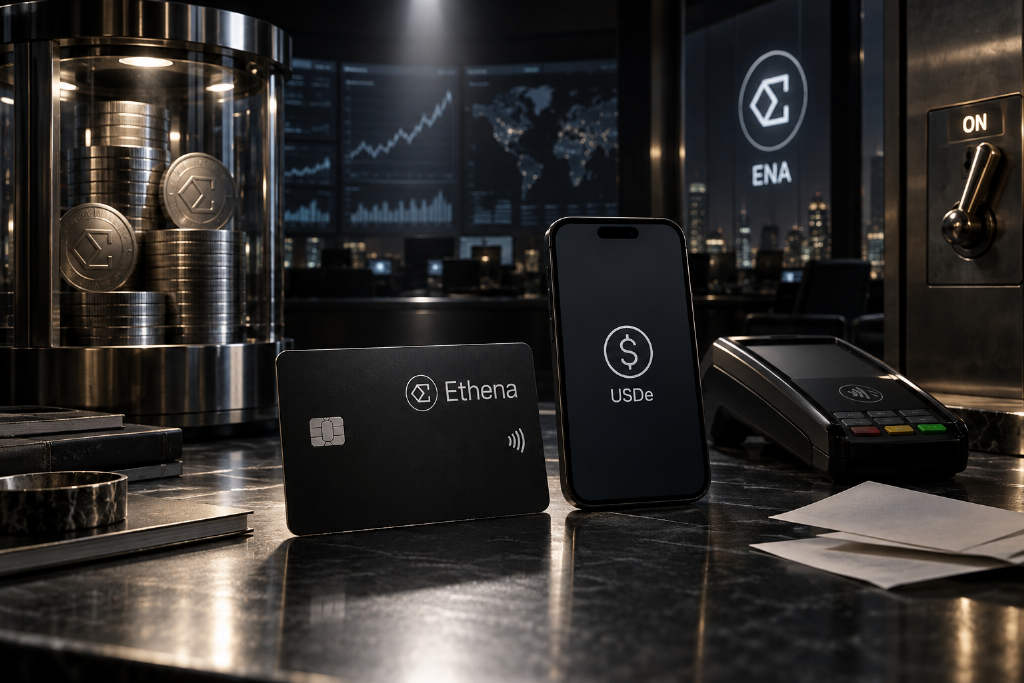
Ethena2026-09-20 07:21:08Ethena’s valuation case shifts as Pay and fee switch tie consumer finance closer to ENAEthena is drawing fresh attention not simply because it launched another crypto card, but because Ethena Pay routes user deposits into USDe, giving the protocol both a consumer payments entry point and exposure to the underlying income generated by its own stablecoin system. That structure sets it apart from many crypto neobanks, where a large share of the economic value tied to customer balances is captured by third-party stablecoin issuers rather than the app distributing the product. The second change is on the token side. With Ethena’s fee switch now approved, growth in USDe supply has a clearer path to ENA buybacks, though the mechanism has not started yet. Under the governance plan, buybacks begin only after USDe supply reaches $7.5 billion, with a 5% take rate at that first threshold and higher extraction rates at $10 billion, $15 billion, and $20 billion. The model remains early. As of Blockworks’ Sept. 15 report, Ethena Pay had reached roughly $250,000 in weekly card spending, 456 funded accounts, and about $4.3 million in balances, while USDe supply stood near $4.6 billion. The core questions are still execution-related: whether Ethena Pay can scale beyond an invite-only product, and whether USDe can grow enough to push ENA’s buyback framework from governance design into live operation.370
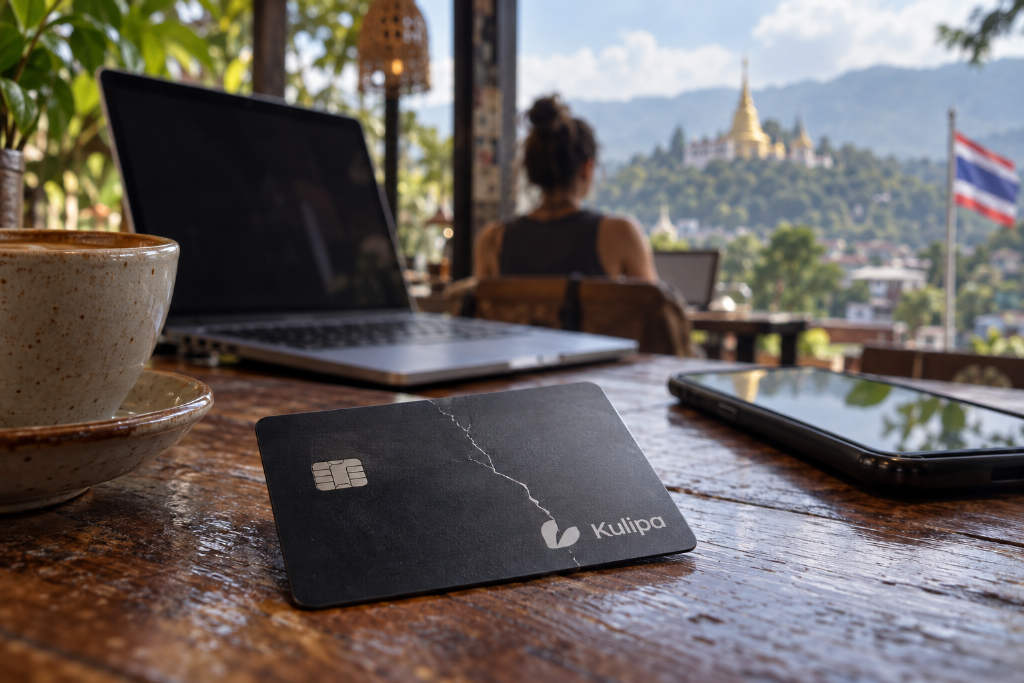
Policy and Re2026-09-18 12:22:00Kulipa collapse highlights why digital nomads need more than a crypto debit cardA PANews article argues that the failure of stablecoin card issuer Kulipa exposed a deeper weakness in the crypto card market: many products rely on rented licenses and BIN sponsorship rather than bank accounts owned by end users. After Kulipa halted operations on July 29, 2026 over solvency issues, about 20 wallet and fintech clients including Solflare, Ready, Flutterwave and nSave saw their card programs disrupted, with some users learning their cards had stopped working only at the point of payment. The piece says this is not an isolated case. It points to Quicko losing its payment license in Poland, three crypto cards failing 13 days later, and Mastercard shutting down UnCash’s no-KYC card. In the author’s view, the core problem is structural: the visible crypto brand often does not control the actual payment rails. Instead, a licensed bank or e-money institution behind the scenes holds the power to keep cards running or shut them off. The article contrasts that model with embedded banking partnerships used by firms such as Dogpay, Plasma and Redotpay, where users can open bank accounts in their own names. It argues that digital nomads need an integrated setup that combines receiving funds, holding balances, spending, merchant acquiring and off-ramping, rather than a card that only handles payments.690
Visa2026-09-08 14:29:14Visa looks to pair VisaNet data with onchain lending as stablecoin card settlement tops $20 billion run rateVisa said its stablecoin settlement volume has passed an annualized run rate of more than $20 billion, marking a 15x increase from a year earlier. With that growth in place, the payments company now wants to combine VisaNet data with onchain lending so blockchain lenders can extend credit to the issuers behind the expanding card activity. The move ties traditional payments data to crypto-native financing and centers on providing working capital to the issuers driving stablecoin card usage.280
Stablecoins2026-08-26 12:08:44Crypto card spending nears $759 million in July as stablecoins move into daily payments and AI agent commerceStablecoins are gaining ground in both consumer payments and machine-to-machine commerce, according to data cited by Blockcast. Paymentscan said crypto card spending within its tracked universe reached about $759 million in July, up more than threefold from a year earlier, with monthly transaction count topping 10 million. USDC accounted for about 50.8% of July volume and USDT for 20.3%, putting the two dollar-backed tokens above 70% combined. The spending mix is also shifting toward everyday use. Data cited for Brazil and Argentina showed activity in groceries, food purchases, ride-hailing, delivery, restaurants and online subscriptions. Visa said in June that more than 160 stablecoin-linked card programs are already live or in development globally, while StraitsX reported sharp growth in infrastructure volume and faster expansion in lower-GDP markets. A second payments market is also taking shape around AI agents. Coinbase said its x402 protocol has processed more than 165 million payments worth about $50 million in total, and Coinbase AI product lead Lincoln Murr estimated roughly 99% of those payments used USDC. The report said stablecoins are finding a niche in high-frequency, low-value transactions such as API access, data, AI inference and compute, while card networks remain more suited to larger purchases, refunds, disputes and credit-based spending.1140
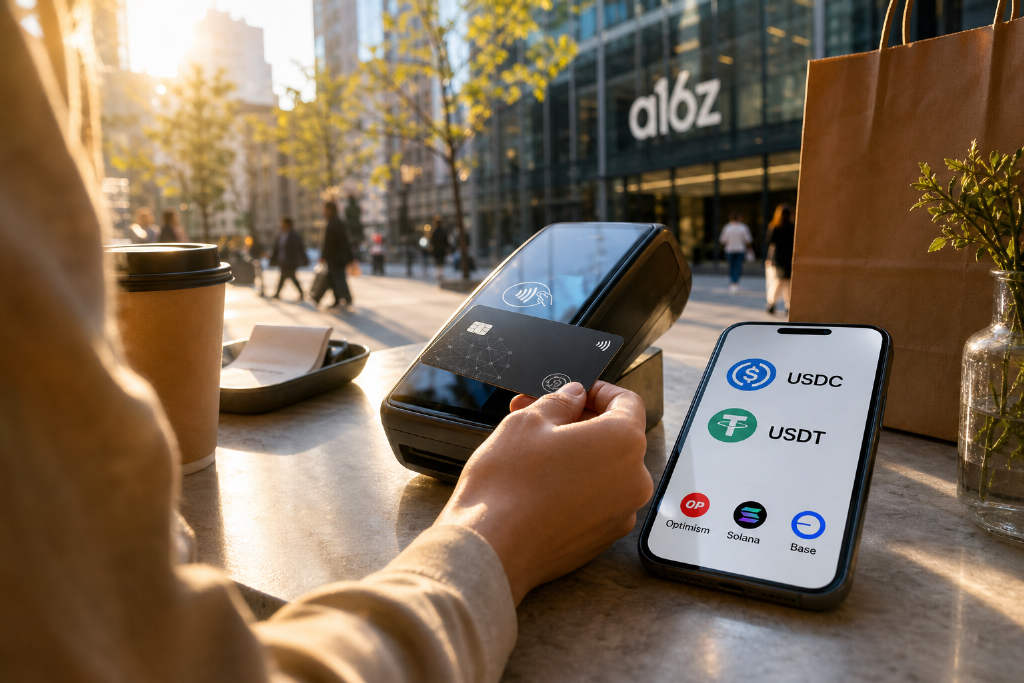
Stablecoins2026-08-23 15:49:49a16z says crypto card spending hit $759 million in July as stablecoins move into everyday purchasesStablecoins are showing up in a more familiar place: everyday card spending. In a crypto card spending analysis published by a16z crypto and based on data from Paymentscan, monthly crypto card spending reached $759 million in July. That was about 2.5 times the $306 million recorded a year earlier, and far above the level seen when tracking began in October 2023, when spending was still below $1 million. The report said dollar-backed stablecoins drove most of that activity. USDC accounted for about 58% of crypto card spending, while USDT made up roughly 26%, putting the two together at more than 80% of total volume. By network, Ethereum Layer 2 Optimism handled about 29% of crypto card transaction volume in July, while Solana and Base each accounted for around 19%. Gnosis, which had been dominant in early 2024, fell to about 2%. Most of these cards run on the Visa network, allowing merchants to receive what appears to be a standard card payment without needing to know that a stablecoin was used in the settlement flow. a16z also noted that crypto cards remain small compared with traditional card networks that process trillions of dollars each month. The firm added that the largest program in the dataset, RedotPay, relied on issuer self-reported spending figures, which leaves some room for caution when reading the data.1170
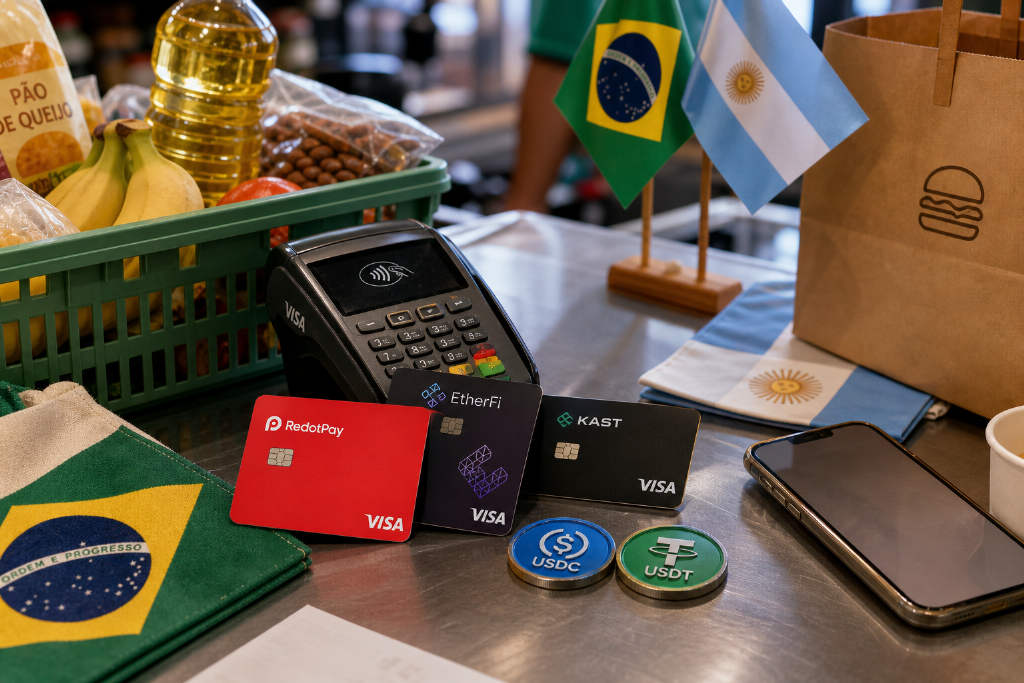
crypto cards2026-08-23 15:23:13Crypto card spending hit $1.04 billion in July, with stablecoins funding 70% of transactionsCrypto card spending reached $1.04 billion in July, rising more than threefold from a year earlier, according to CoinDesk, as stablecoins took a larger role in everyday payments. USDC and USDT funded 70% of more than 10 million transactions, while the average payment size climbed from $59 last year to $86. The figures point to a shift in usage away from large cash-outs and toward routine purchases such as groceries, ride-hailing, and food delivery. Growth was led by emerging markets. Data from Visa partner StraitsX showed that total transaction volume in low-GDP markets rose about 600% between March 2025 and February 2026, compared with 150% in high-GDP markets. In Latin America, Oobit said active users in Brazil spend about $400 a month, with grocery stores accounting for 35% of regional activity, while 72% of payments in Argentina used USDT and food made up 41% of transactions. Market share also remained concentrated, with RedotPay, EtherFi, and KAST accounting for about 77% of tracked July volume.1240